AI-native culture: the biggest unlock right now
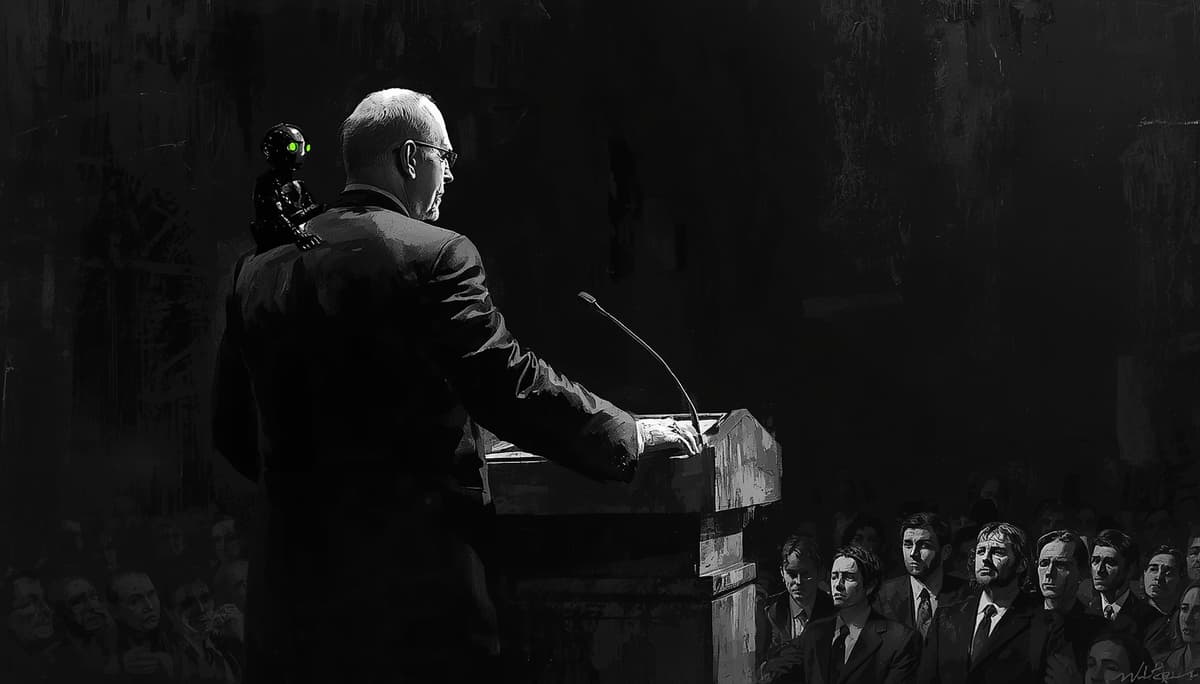
The thing blocking companies from becoming truly AI-native is the absence of a clear mandate from the top.
Senior leaders - smart, capable people who see exactly what AI can do for their operations - are sitting with the tools, the appetite, and a front-row view of competitors scaling programmes and output in ways that were impossible two years ago. Yet without a deliberate, strategic decision from leadership that says we are becoming an AI-native organisation, nothing moves.
This is different from an AI strategy. An AI strategy comes after. You cannot decide which enterprise plan to commit to, or how to restructure your team, or what KPIs to build around until leadership has first made the foundational call that this is the direction. Strategy follows mandate. Culture follows mandate. Everything follows mandate.
It needs to come from the top and it needs to change the entire operating environment. Enterprise AI needs to become a real commitment, the budget opened, and there needs to be genuine objectives around what AI-native looks like in practice - how many programmes we could now run that were previously impossible, with the same headcount. Revenue per FTE as a lens, focused on new capacity rather than extraction.
It also comes with a question you now have to ask every time a role opens: what part of this job, this process, this project can be handled by AI? That question alone reshapes how you think about hiring, about workload, about where your people actually need to be.
At Backbase, we made this move, and we are "lcuky". There is also a very specific reason for us beyond internal efficiency. We are selling serious agentic AI to some of the biggest banks in the world. You cannot walk into those conversations and tell a bank to become AI-native if your own operation is running on scattered chat interfaces, individual tools, and no unified strategy. You have to walk the talk. The credibility lives in the doing.
And look, the compliance and regulatory environment we work in is not a simple one. Financial data, global banking infrastructure, serious oversight. If we can move in that environment, the argument that "our industry is too complex" stops holding as an excuse.
Leaders need to start asking, what can our people do now, with AI, that they could not do before? Where should we deploy their time? What grunt work can we hand over, because it does not require a human anymore even though it did two years ago? And when you remove that work from their plate, where does that freed-up capacity go?
Strategy, planning, creativity, innovation, quality control - the parts of the process where human judgement, taste, and experience have irreplaceable impact. Let AI take the steps in the middle that do not need a human in the loop. Move your people upstream to where the thinking happens.
But it starts with a mindset.
None of that is possible without leadership buy-in. When there is no mandate, compliance blocks it, teams splinter, and different departments run different tools with no connective tissue. Pilots never scale. The bigger the company, the more visible this gets - but the principle holds at any size.
Make the deliberate decision first. Before the tools. Before the vendor conversations. Before the strategy deck. Decide that your organisation is going to redesign its processes from the ground up around AI. Then everything else has somewhere to land.