The Google update that made LinkedIn articles worth taking seriously

Google likes ranking LinkedIn articles. That's been true for a while, but the received wisdom held that backlink quality from Pulse didn't do much for your actual brand or website. So the collective shrug was understandable. The collective response was to file it under "nice to have" distribution and move on.
The recent big Google update has given LinkedIn Pulse articles a proper empowerment boost, and publishing there now puts you directly in front of a search audience that's actively looking for expertise.
We've been testing this thoroughly. happen firsthand - a colleague with thirty years of cybersecurity expertise wrote a LinkedIn article on a heavily searched topic, published it, and within forty-eight hours, it was sitting at the top of Google for "How banks can prepare for Mythos". The AI snippet pulled from him, not from leading news sources covering the shit out of this topic at the moment, not from big-brand websites. From a LinkedIn article written by a person who knew what they were talking about, with fewer than 1000 followers.
The reason it works now is that Google is looking for expertise and valid voices on topics, and what better place to look than LinkedIn, where it can validate the profile behind the article. Combine proprietary insight with real, validated expertise, a specific angle, and a point of view built from three decades in the field. You get non-commodity content doing exactly what it's supposed to do.
So when LinkedIn's organic reach is genuinely rough at the moment - and it is, the algorithm has not been kind for impressions and engagement for a while now - measure LinkedIn by what it does for you across the wider search ecosystem. As a piece of the bigger marketing mix, LinkedIn articles are one of the strongest distribution channels running right now - especially looking at how it influences search engines. And it's not just Google; the ripple effect spills over in LLMs
Here is another example of an article of my own on a very popular topic at the moment, around "Skills for Content Engineering".
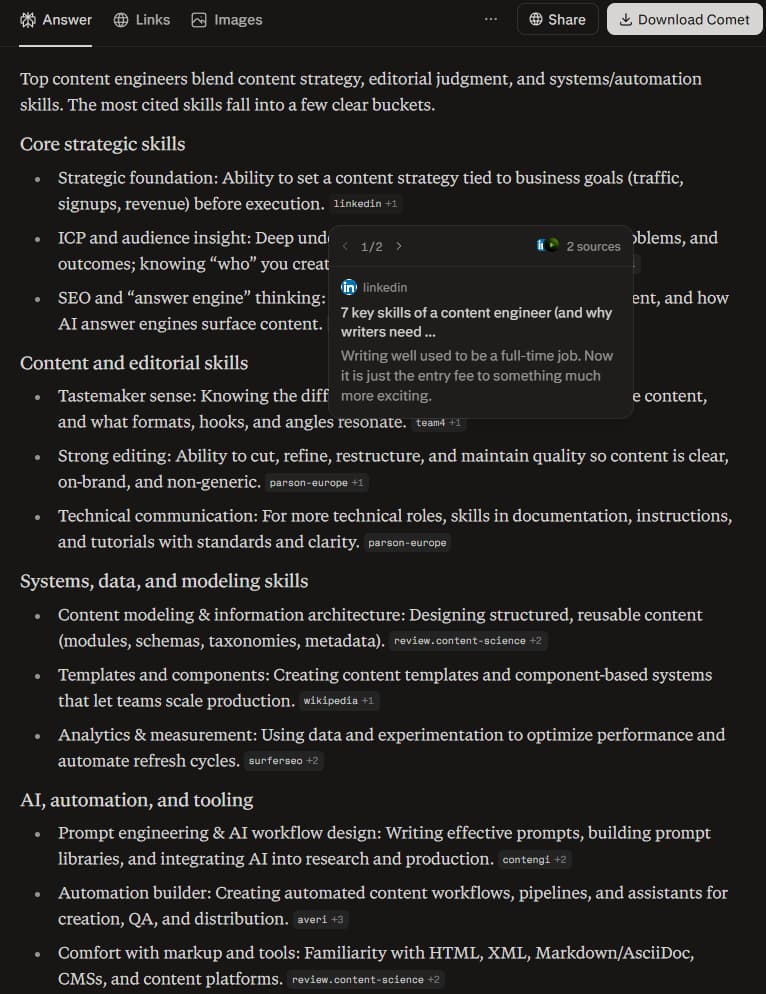
Get your domain experts posting. The CEO, the CTO, whoever holds genuine specialist knowledge in your company - those are the people who should be writing thought leadership articles on LinkedIn. Real expertise on specific, searchable topics. Then pull those authors onto your website as named contributors. When you publish the same article under their name on your site as you've posted on LinkedIn, Google sees two credible sources from the same expert voice, and your website gets a boost on that topic too.
These don't compete with each other. I've run this experiment multiple times now, and the same article published in both places pushed both URLs toward the top of Google. The brand website benefits because the author is now a real person with a public presence, with a named byline that carries genuine weight with search algorithms.
Treat LinkedIn as SEO infrastructure, and the domain authority that comes with publishing genuine expert content there - linked to your wider web presence - is more powerful than ever in the current state of Google things.
Your specialists have expertise no one else does. They should write. Specific topics, real experience, published on LinkedIn and mirrored on your website - that combination is working right now in a way it simply wasn't six months ago.